

When individuals experience complications after a medical device procedure, finding reliable information can be overwhelming. Patients may be dealing with pain, limited mobility, follow-up appointments, revision surgery, and uncertainty about whether what happened to them is part of a larger legal issue.
That is why public access to legal information matters.
Lawyers of Distinction has long been committed to recognizing attorneys who demonstrate professional achievement and credibility within the legal field. As the legal marketplace continues to evolve, that mission also includes helping bridge the gap between attorneys and the public, especially in complex areas such as mass tort litigation, defective medical device claims, and product liability cases.
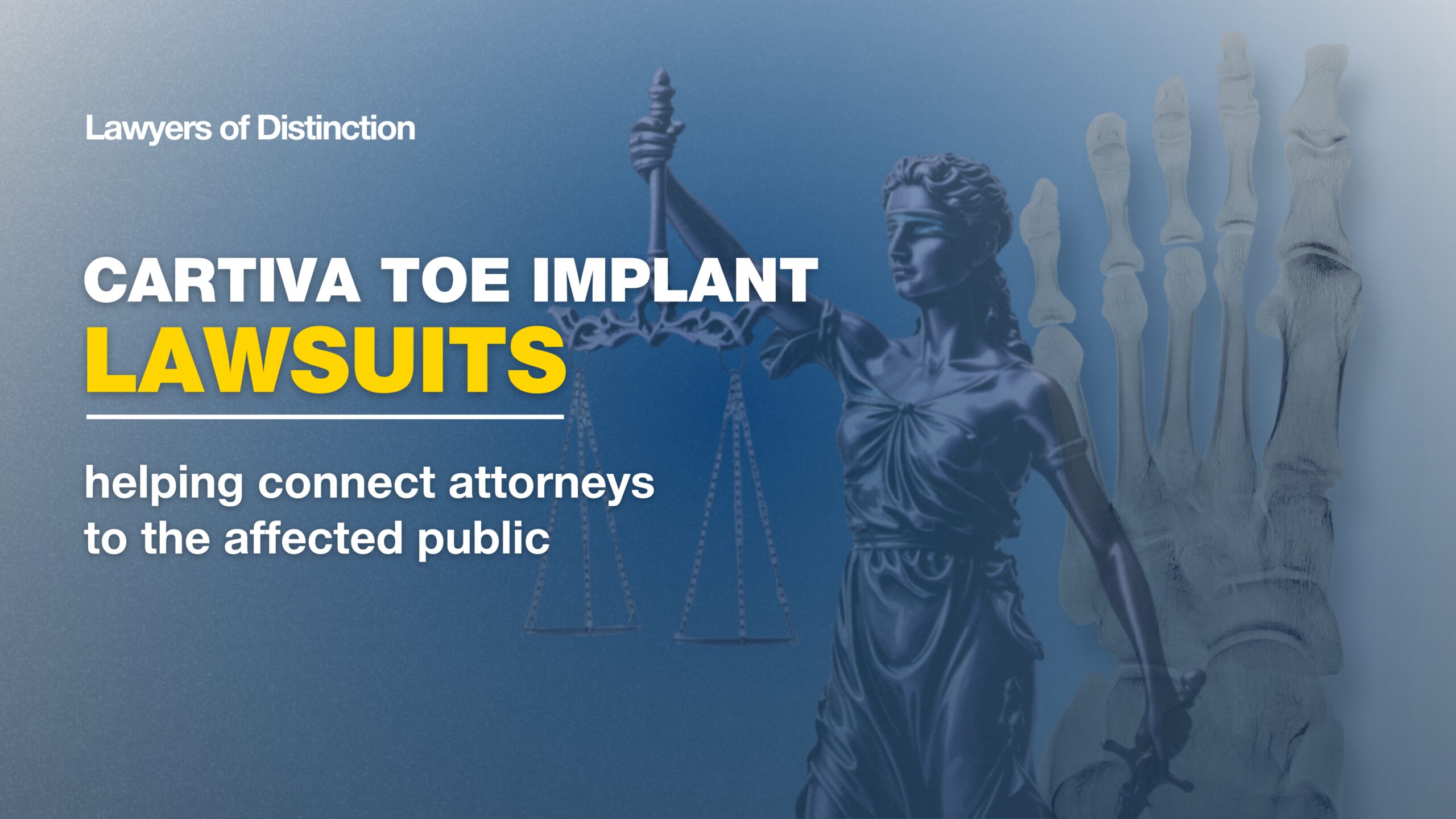
One current example is the growing attention surrounding Cartiva toe implant lawsuits.
What Is the Cartiva Toe Implant?
The Cartiva Synthetic Cartilage Implant was designed to treat arthritis at the base of the big toe, a condition often associated with hallux rigidus or hallux limitus. The implant was intended to serve as an alternative to fusion surgery by helping reduce pain while preserving motion in the joint. However, some patients have reported complications after receiving the Cartiva toe implant. These concerns have led to lawsuits alleging that the device failed or did not perform as expected.
Cartiva implant lawsuits commonly involve allegations related to implant failure, persistent pain, loss of mobility, revision surgery, implant removal, or the need for toe fusion after complications.
Why Cartiva Implant Lawsuits Matter
Mass tort cases often arise when many individuals report similar injuries or complications involving the same product, medication, or medical device. These cases can be difficult for the public to understand because they often involve medical records, product history, regulatory updates, scientific evidence, and complicated legal procedures.
In the Cartiva litigation, patients and families may be searching for answers to questions such as:
1.Was the Cartiva toe implant recalled?
2. What symptoms or complications have been reported?
3. Does persistent pain after a Cartiva implant matter?
4. What records are needed for a Cartiva implant lawsuit?
5. How do I know whether I may qualify for a legal review?
These are exactly the types of questions that make clear, accessible legal information so important. People affected by potential defective medical devices should be able to understand the issue, learn what documentation may matter, and connect with appropriate legal resources when needed.
Helping the Public Navigate Mass Tort Information
The legal industry is changing. Today, people do not only look for attorneys through traditional referrals. They search online, read legal articles, watch videos, review social media posts, and look for signs of credibility before deciding whether to contact a lawyer.
For mass tort and defective medical device cases, that process is even more important.
Patients affected by products such as the Cartiva Synthetic Cartilage Implant may not immediately know whether their experience is isolated or part of broader litigation.
They may also be unsure whether to speak with a medical provider, gather records, or request a legal review. Educational legal content can help make that process less confusing.
Lawyers of Distinction recognizes the importance of helping attorneys and the public connect in meaningful ways. By sharing information about emerging litigation areas, legal trends, and public-facing resources, we help support a more informed legal marketplace.
This benefits both sides.
For the public, it creates greater access to legal information.
For attorneys, it creates opportunities to reach individuals who may need guidance in highly specific practice areas.
Why Visibility Matters for Attorneys Handling Mass Tort Cases
Mass tort litigation requires more than legal skill alone. Attorneys handling these cases must also be visible, accessible, and trusted by the people searching for help.
When someone searches online for terms like “Cartiva toe implant lawsuit,” “Cartiva implant recall,” “failed Cartiva implant,” “Cartiva implant pain,” or “Cartiva revision surgery,” they are often looking for clarity during a stressful moment.
Attorneys and legal platforms that provide clear, responsible, and helpful information are better positioned to serve that need.
That is why visibility has become a major part of modern legal credibility. A strong digital presence can help attorneys educate the public, build trust, and connect with individuals who may not otherwise know where to begin.
A Broader Model for Legal Access
The Cartiva toe implant litigation is one example of how public-facing legal education can support both attorneys and potential clients.
As more people turn to online search, social media, and AI-powered tools for legal information, organizations like Lawyers of Distinction have an opportunity to help connect individuals with resources related to specific legal issues, including mass torts, defective medical devices, product liability claims, and consumer protection matters.
Our Network of Lawyers is Standing By Ready to Help You
For individuals who received a Cartiva toe implant and experienced complications such as ongoing pain, mobility problems, implant removal, revision surgery, or toe fusion, legal review may help determine whether their situation fits the current litigation. Contact us to be put in touch with an attorney to review your case.
For attorneys, this type of public education reinforces an important truth: visibility is no longer optional. It is part of how people find help, evaluate credibility, and decide whom to trust.
Lawyers of Distinction remains committed to recognizing professional achievement while helping connect attorneys to the public.
Disclaimer: This article is for informational purposes only and does not constitute medical or legal advice. Individuals experiencing health concerns should consult a qualified medical professional. Legal eligibility depends on the specific facts of each case.</